
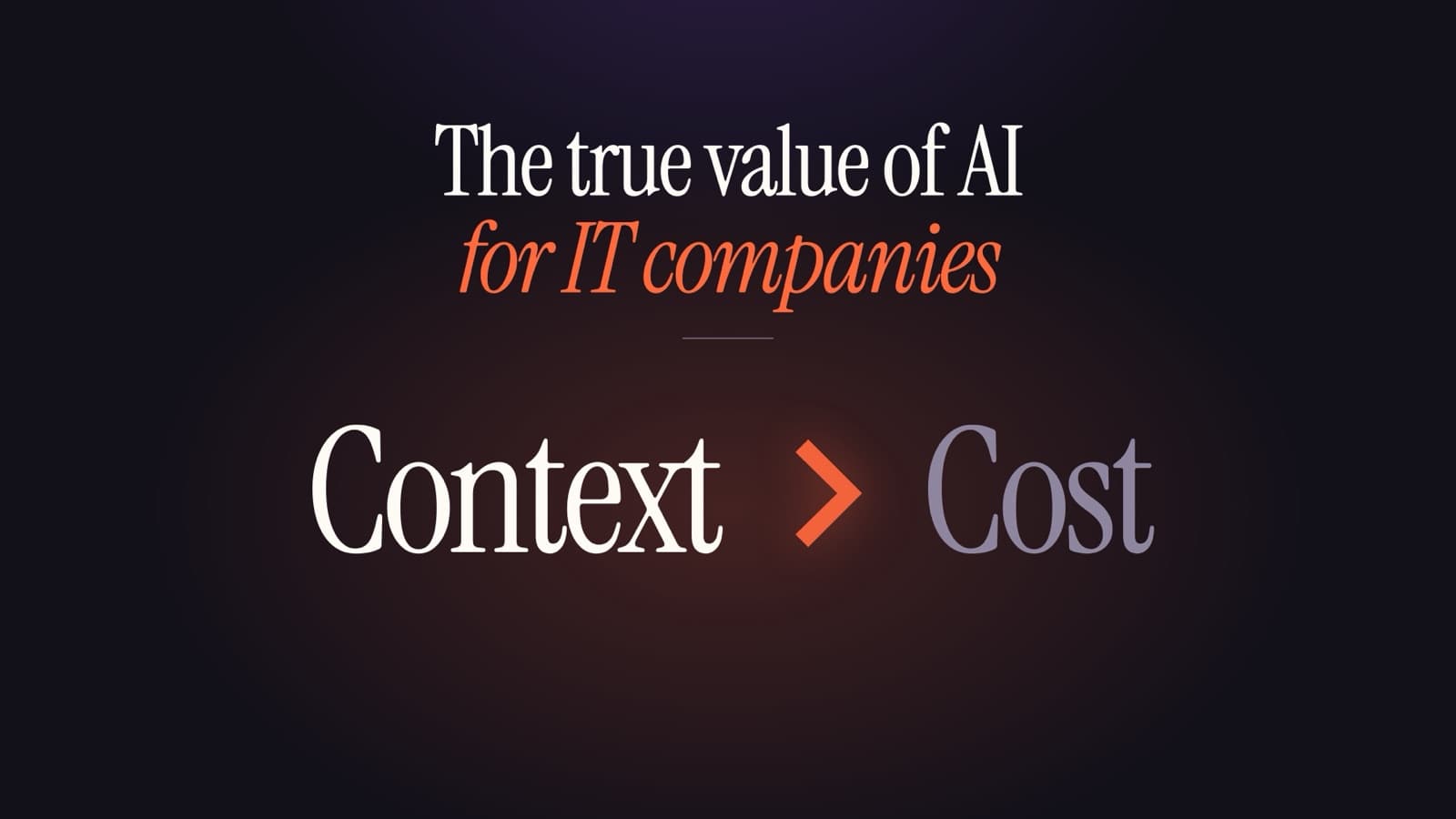
This month, Accenture capped what it centrally funds for Claude at $29 a month per person. Anything above that is charged to the project. It’s a sensible step to control spend, and it puts one question in front of every IT company: what are we actually paying for?
I build Brand Stori, so let me answer as a builder. Your AI bill isn’t a usage problem. It’s a context problem. Fix the context, and the cost follows. Not the other way round.
Why is AI output at IT companies generic and expensive?
Because the AI doesn’t know your company or your buyer. So every person makes up for it in their own way.
Every IT company has two kinds of AI users. A few, maybe 10%, carry the context in their head. They know the client, the offering and the proof before they type a word. They get a good answer in a turn or two, on very few tokens.
The other 90% don’t have that context ready. So they paste more in: a deck, two case studies, last year’s proposal. Then they ask again. “Make it better.” “Make it right for a CIO.” “Try again.” Every turn costs money. None of it gets them closer to the client.
That’s why AI leaderboards mislead. The person at the top is often the one sending the densest context and getting the weakest output.
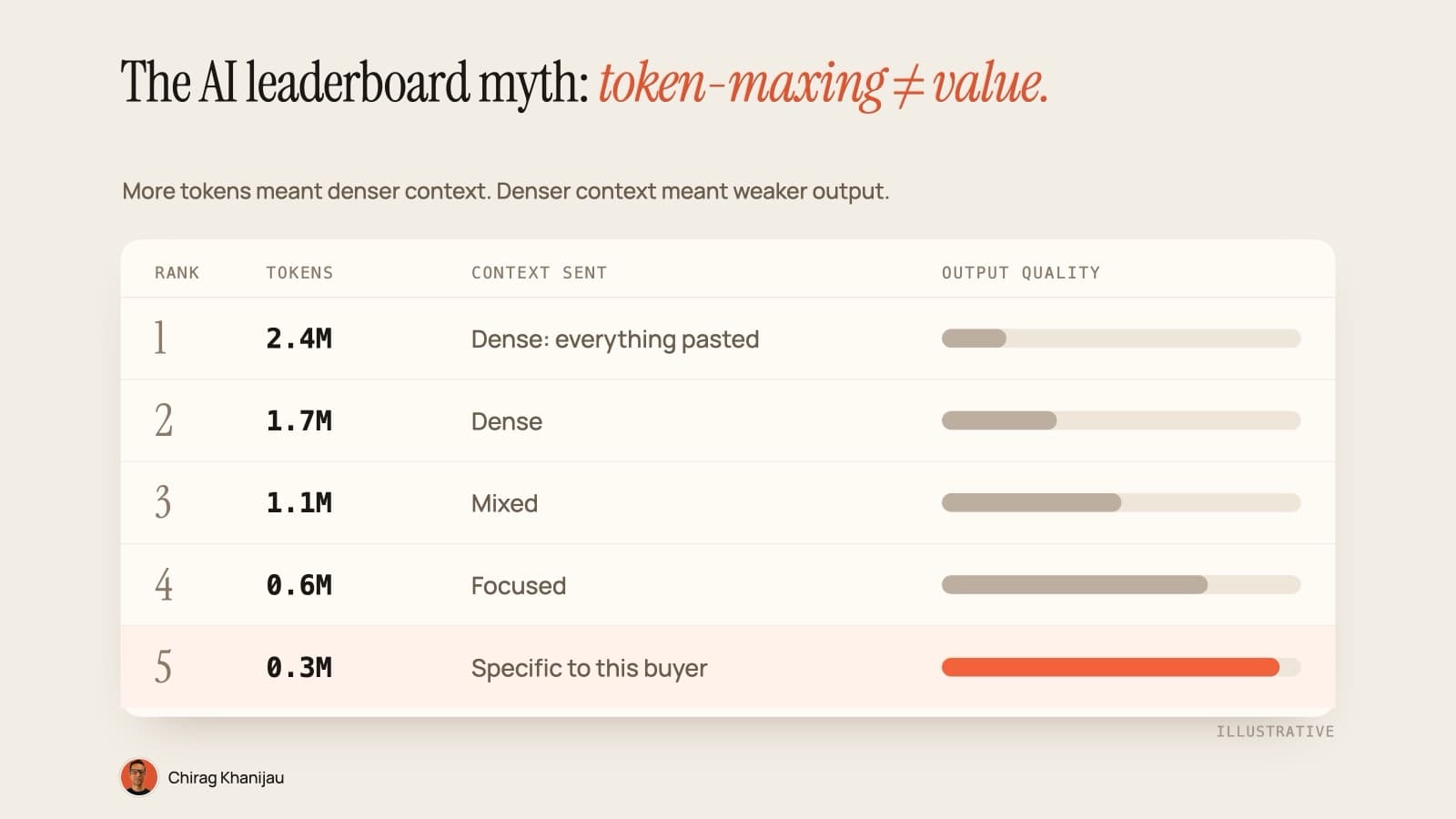
A spending cap doesn’t change that. It only stops the 90% sooner, and they are the people who needed AI the most.
Where does the AI bill actually go?
Two places.
- Read tokens. What you send the AI: your company’s context, again and again, in huge amounts. Every turn re-reads everything you pasted.
- Write tokens. What the AI makes: the deck, the proposal, the post. When nothing tells it what good looks like for this buyer, it reinvents the piece every time someone says “make it look better”, and most drafts get thrown away.
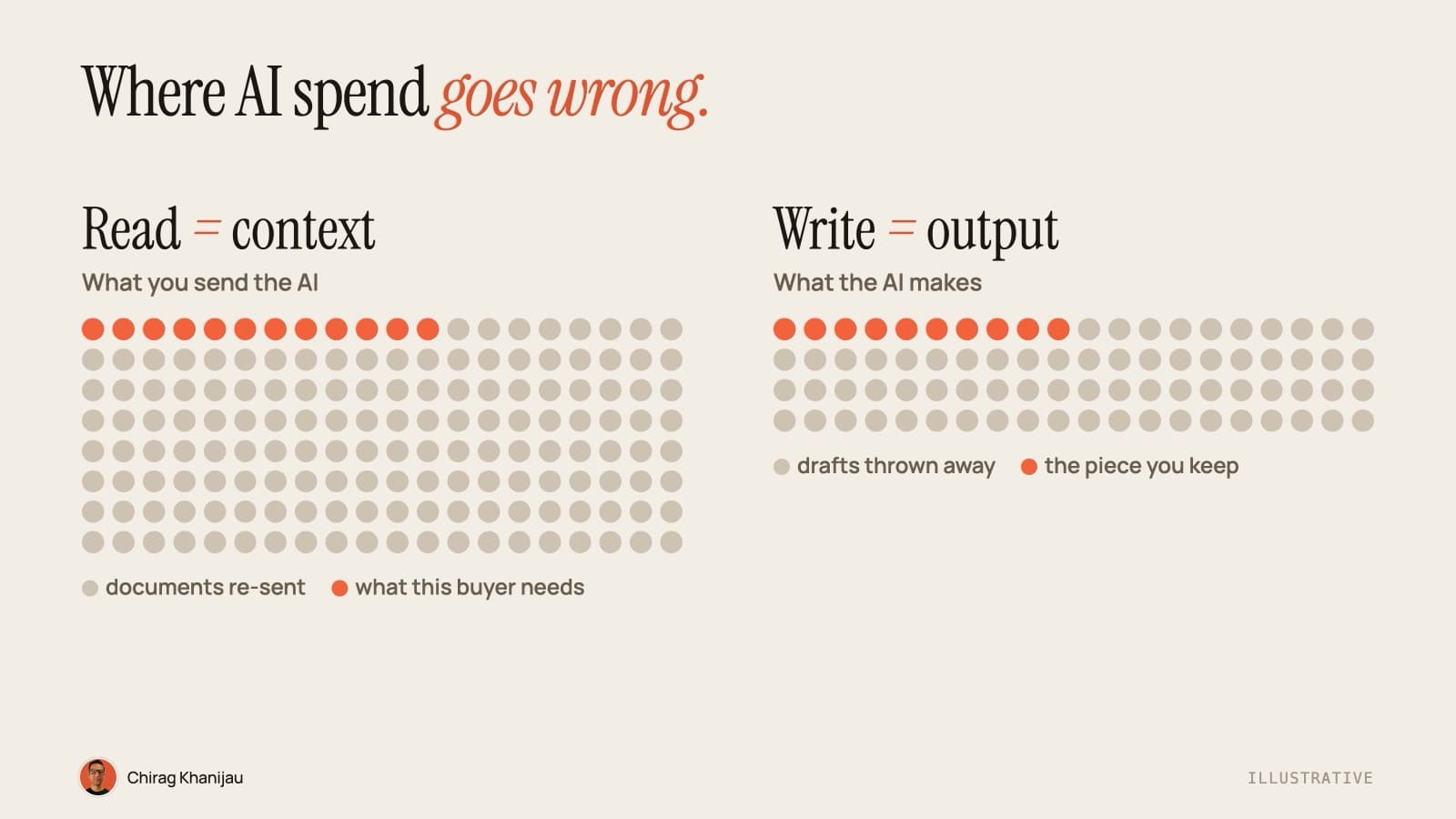
A cap fixes neither. Sending less, and sending the right thing, fixes both. Bring read and write down together and, by my estimate, the bill falls by more than 10x. At that point $29 a month is more than enough.
Why can’t one deck work for the CIO, the CFO and procurement?
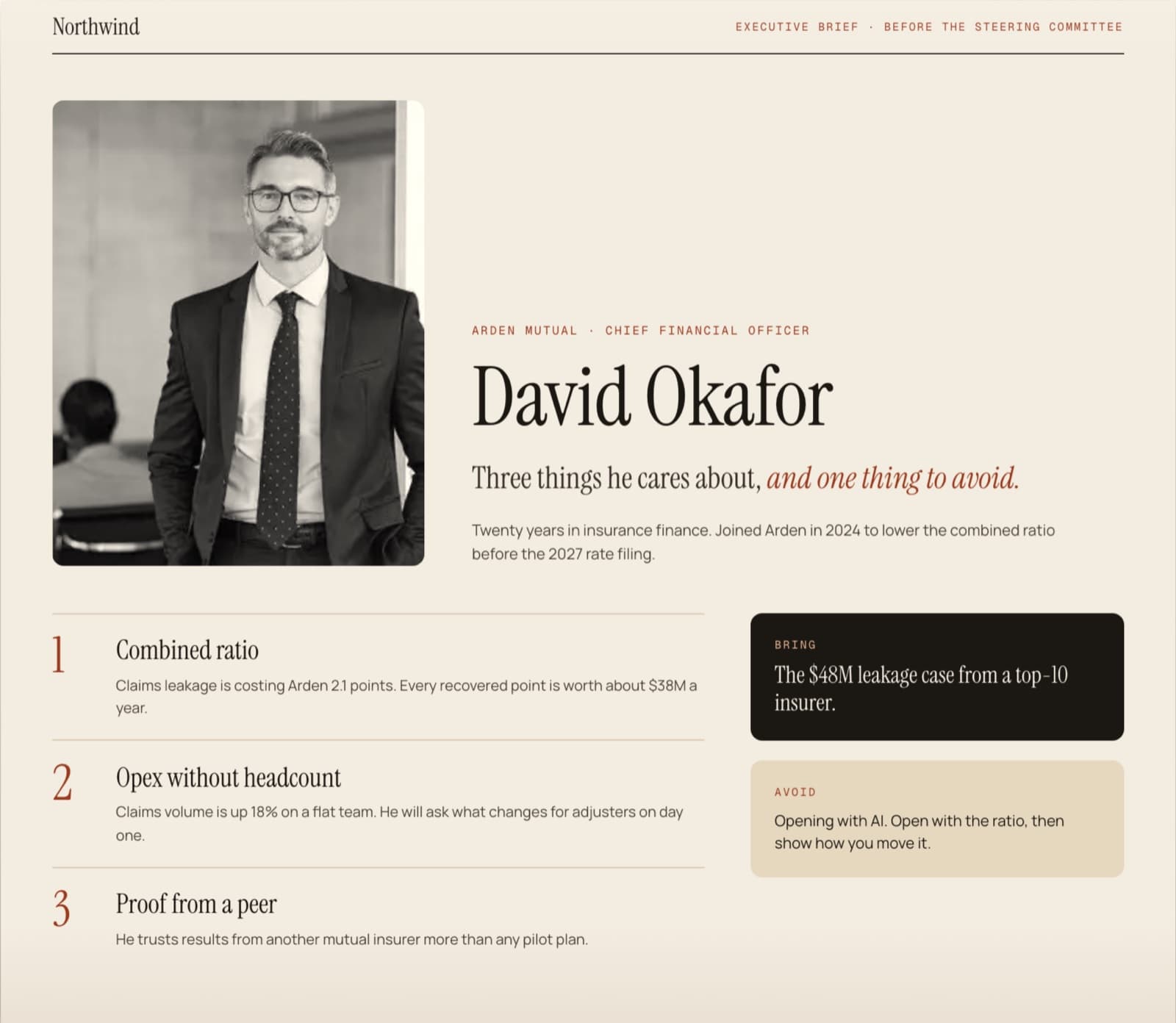
Take one bank. You’re proposing the same modernisation programme, and three people will judge it.
- The CIO’s deck opens with the estate: how it fits, what it touches, and how today’s systems keep running. The proof is a similar migration at another bank.
- The CFO’s deck opens with the money: the cost, the payback, and the risk to this year’s numbers. The proof is a business result, not an architecture diagram.
- Procurement’s deck opens with scope and terms: what’s in, what’s out, and how you compare with the other bidders.
That’s three different pieces. Different proof, different order, different words. IT deals are multiplayer games, and a general AI tool treats every reader the same.
Without context, someone writes one generic deck, then spends ten turns bending it toward each buyer. With the right context, each piece starts from what that buyer cares about, with your proof for their industry already in it.
What is a company brain, and how is it different from search over documents?
The usual fix is search. SharePoint plus Copilot, or RAG and vector search with an AI on top. I’ve seen this with more than 35 IT companies, and they all say the same thing: they have all the tools, and the output still sounds like everyone else’s.
Search finds everything that matches and sends all of it. Proposals, SOWs, case studies, brochures, analyst reports, in seven versions each. More context, every single time. And none of it knows how an IT buyer thinks.
A company brain works the other way round. It reads your documents once and keeps only the load-bearing part, as small connected pieces, organised the way an IT company works: offerings, industries, buyers, partnerships, success stories. When someone asks for a piece, the AI gets only what that piece needs.
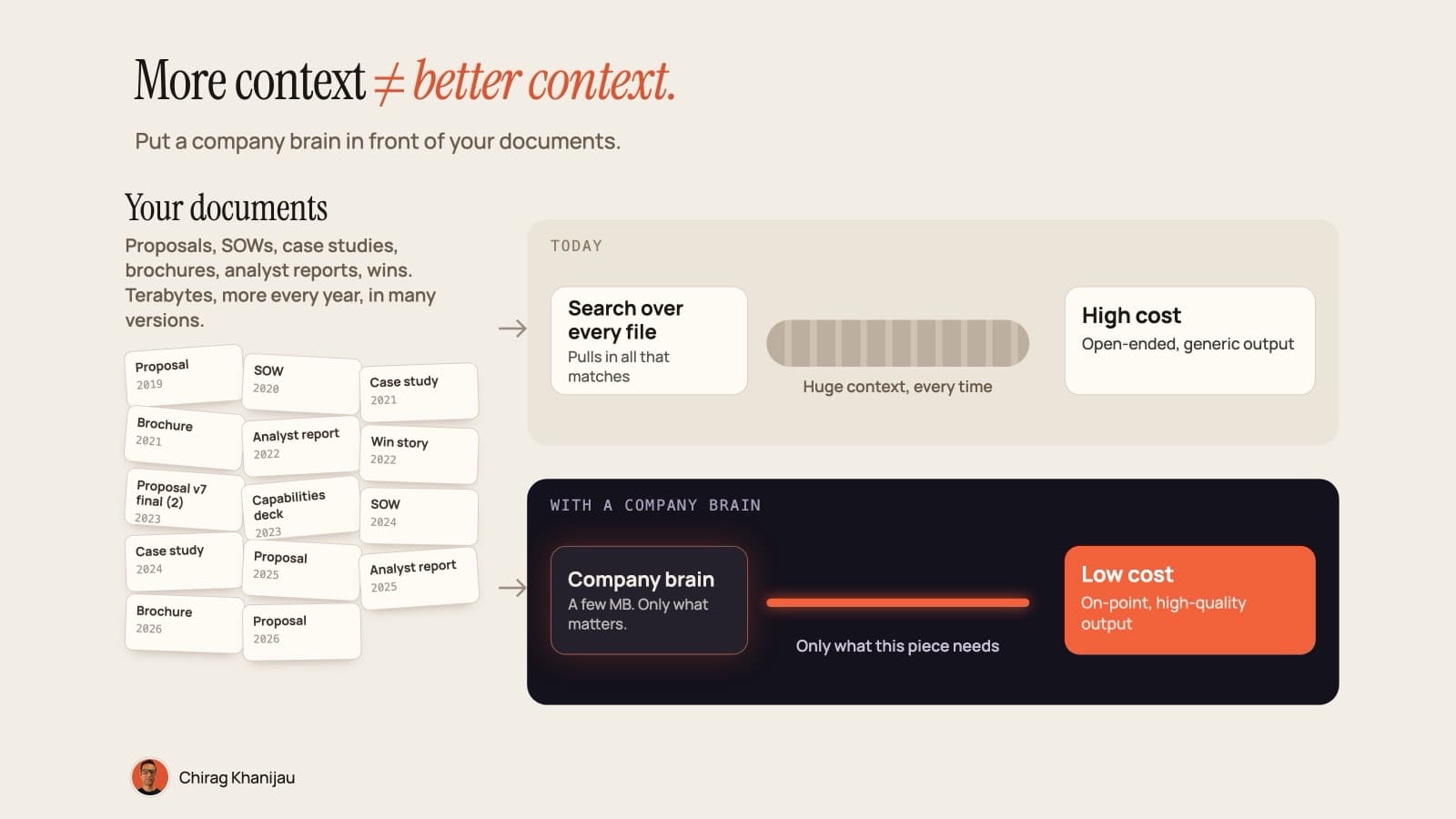
How small? In our builds, a whole IT company’s brain, thousands of connected pieces, comes to under 2 MB. Not terabytes. Megabytes.
Less to read, and every part of it carries weight. That’s why the cost and the quality get better together, not one at the expense of the other.
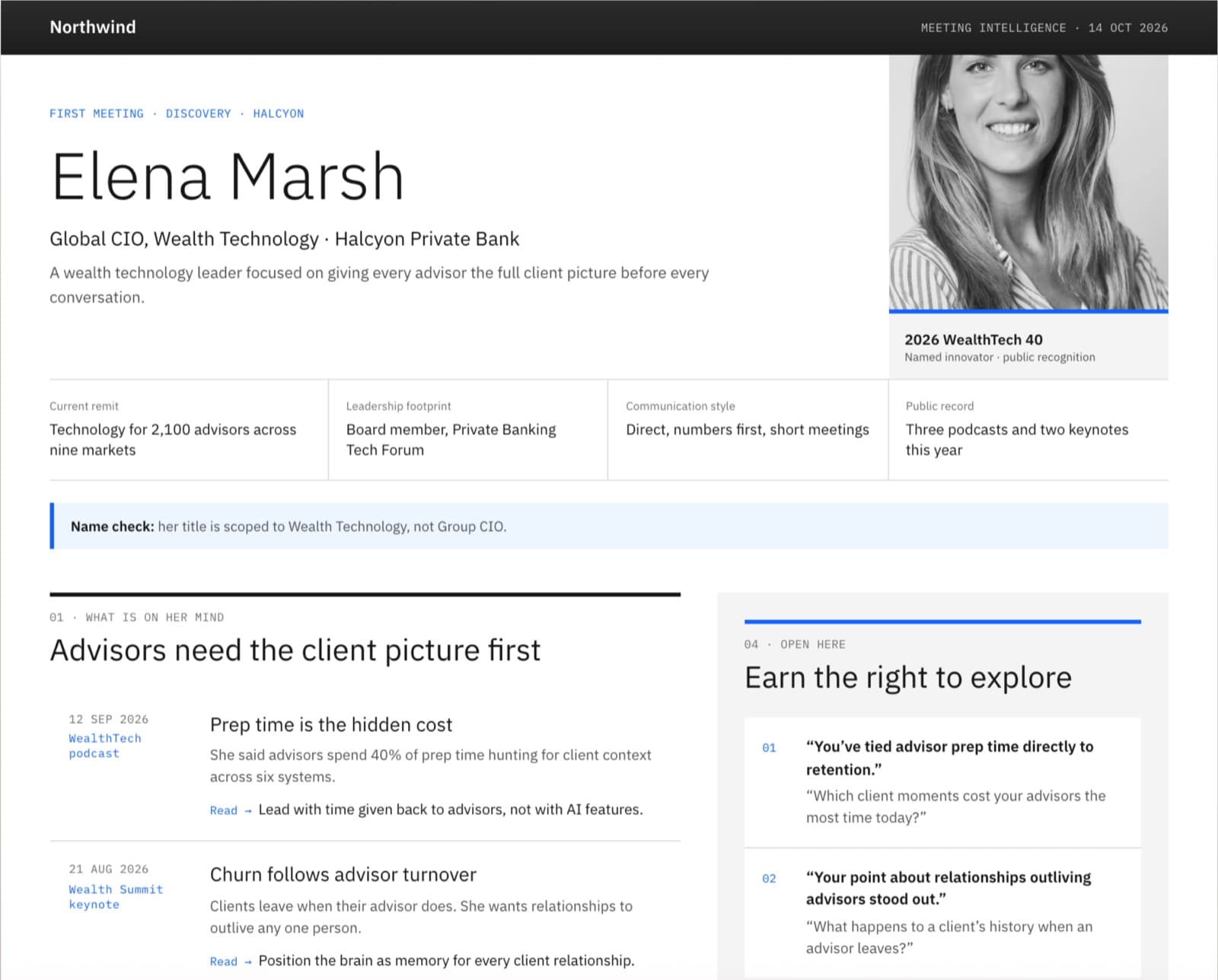
What does it look like working?
That’s what we built. Brand Stori is the company brain for IT sales and marketing: one brain that knows your company and your buyers, behind every seller and marketer.
You start with your website, and your company brain is ready in under 3 minutes. Then you pick one of 12 starting points: a sales deck, a LinkedIn post, a case study, a landing page, a proposal microsite, meeting prep, a capability doc, a white paper, account research, competitive intel, an ABM campaign or a lead gen campaign.

Your data stays yours. It’s never trained on, there’s zero retention, and your workspace is walled off from everyone else’s.
How do I try it?
Go to brandstori.ai. It’s free to start, with no demo call. Give it your website, watch your brain form, and make your first piece for a real buyer.
Then measure your AI by what it creates, not by what it consumes.
“Don’t cap the tokens. Fix the context.”— CK, FOUNDER, BRAND STORI
Spent his career in IT sales and marketing. Now building the company brain he wished he’d had.